
Drain Cleaning
Why Does My Drain Keep Clogging?
A drain that clogs once may be a simple blockage. A drain that keeps clogging is telling you something about the pipe, the fixture, or the main sewer line.
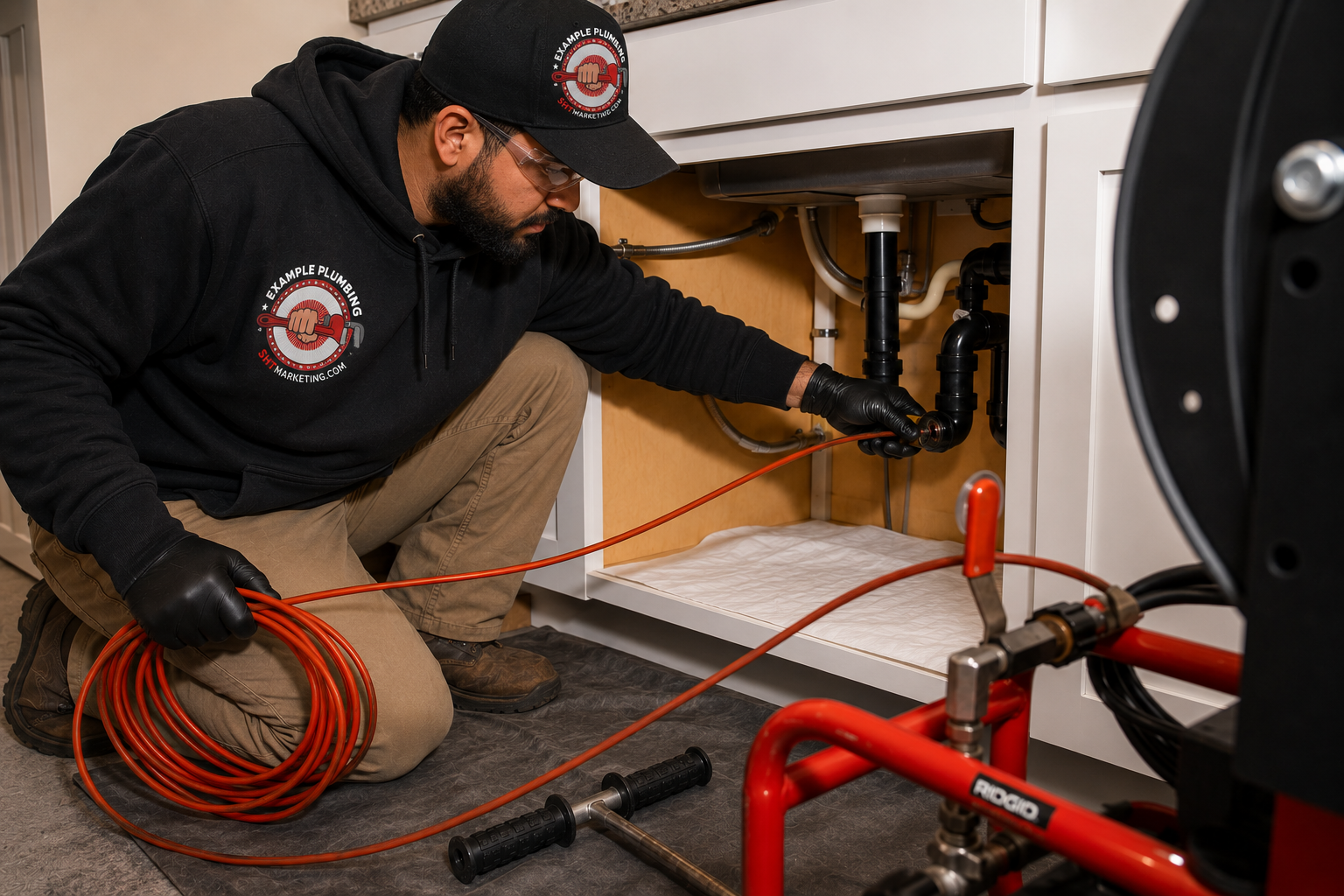
A plunger or basic drain tool may clear a one-time clog. When the same sink, tub, shower, or floor drain slows down again and again, the blockage is often only being opened temporarily. The better question is why material keeps collecting in the same place.
Common reasons a drain keeps clogging
Hair and soap buildup
Bathroom drains collect hair, soap residue, skin oils, and product buildup. The material can form a sticky mat that catches more debris each time water passes through.
Grease and food residue
Kitchen lines can develop a coating of grease and food particles. Even when grease is poured down the drain as a liquid, it can cool and collect on the pipe walls. Over time, the opening becomes narrower and easier to block.
Mineral scale or aging pipe
Older metal piping can become rough inside because of corrosion or scale. A rough pipe catches material more easily than a smooth one. Repeated snaking may create a temporary path without restoring the full inside diameter.
A problem farther down the line
If a shower, toilet, and sink are all draining poorly, the issue may be beyond the individual fixture. A partial main-line blockage can make several drains act up at once.
Why chemical drain cleaners are not a good long-term plan
Chemical products may move some soft buildup, but they do not show you what caused the restriction or whether the pipe is damaged. Repeated use can also be hard on some plumbing materials and creates an unpleasant situation for anyone who later has to open the line. Mechanical cleaning and inspection give a plumber more information.
When a camera inspection helps
A sewer camera can be useful when clogs return after cleaning, when several fixtures are affected, or when the plumber suspects roots, a belly, a break, heavy scale, or another structural problem. The camera is not needed for every slow sink, but it can stop a cycle of guessing when the symptoms point to a larger issue.
Snaking versus more thorough cleaning
A cable machine is excellent for opening many blockages. In some lines, however, the goal is not only to punch through the clog. It is to remove buildup from the pipe walls. The right method depends on the pipe material, condition, location, and type of debris. A good technician chooses the least aggressive method that can solve the actual problem.
Signs the problem may be in the main sewer line
- More than one fixture backs up at the same time.
- A toilet gurgles when another fixture drains.
- Water rises in a tub or shower when a toilet is flushed.
- A floor drain backs up during heavy water use.
- The problem keeps returning after individual drains are cleared.
How to reduce recurring clogs
Keep grease, wipes, paper towels, hygiene products, coffee grounds, and fibrous food waste out of drains. Use strainers where practical, clean hair from bathroom drains regularly, and pay attention when a drain starts slowing down rather than waiting for a full backup.
Frequently asked questions
Is a slow drain always a clog?
No. Venting problems, pipe slope, damaged piping, and restrictions farther downstream can create similar symptoms.
How often should drains be professionally cleaned?
There is no universal schedule for every home. Recurring symptoms, the age of the piping, past sewer problems, and household use are better guides than a fixed calendar.
Why does the clog come back after snaking?
The cable may have opened a path without removing all of the buildup, or the pipe may have a structural condition that causes debris to collect again.
For a service-page example built around this search intent, see Drain Cleaning.
Need help with a plumbing problem?
Use the guide to understand the issue, then choose the service that fits the symptoms you are seeing.
View Plumbing ServicesCall 720-517-0622