
Leak Detection
Warning Signs of a Slab Leak in a North Texas Home
Slab leaks can be difficult to see because the piping is below the foundation. The clues often appear as unexplained water use, warm flooring, pressure changes, or moisture near the slab.
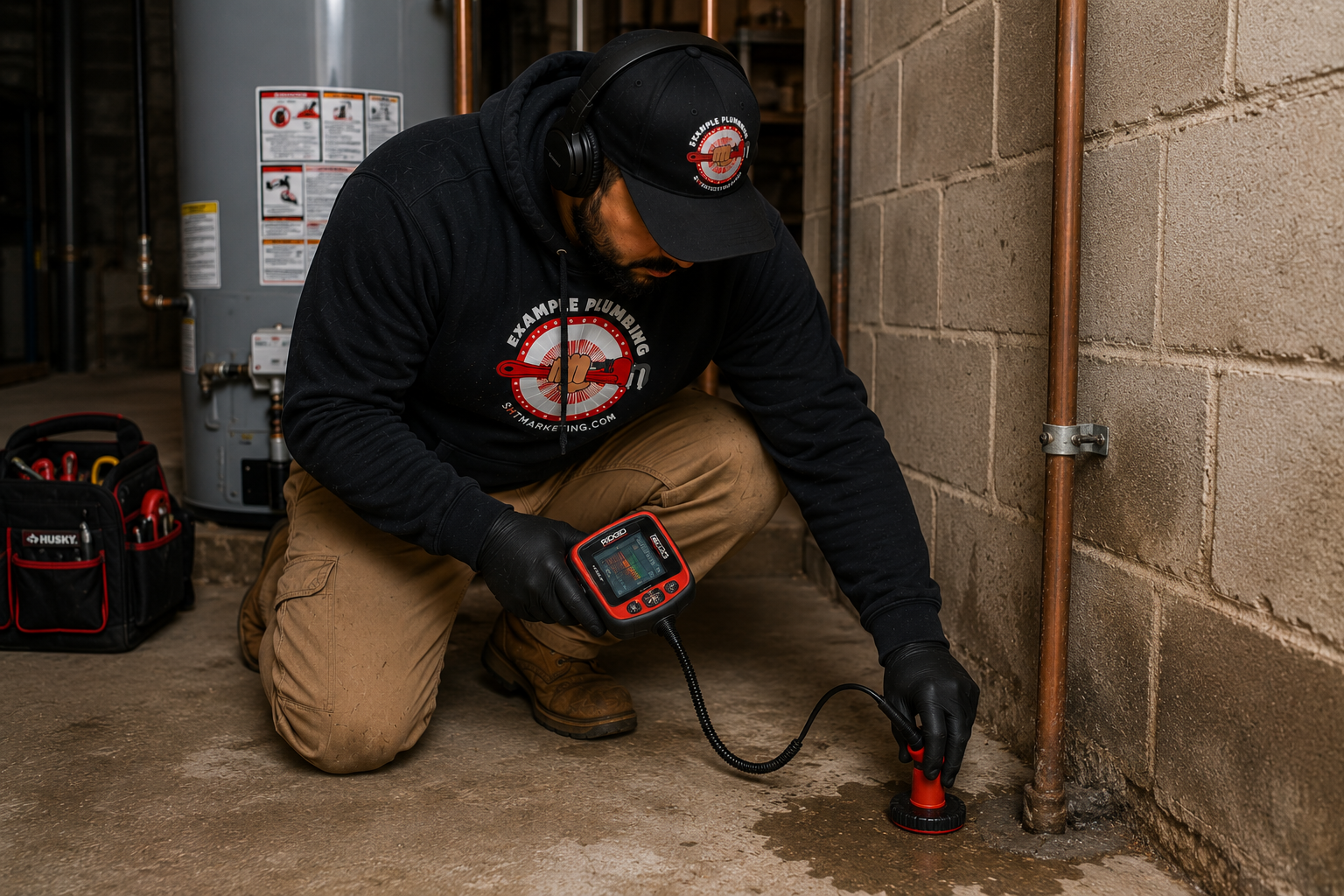
A slab leak is a leak in water piping located below or within the concrete foundation. North Texas homeowners tend to take the possibility seriously because foundation movement, soil conditions, and hidden water can create expensive secondary damage. The first step is confirming that a plumbing leak actually exists.
Unexplained water use
A leak on a pressurized line can run continuously. If the household routine has not changed but water use has risen, compare the meter with known fixtures and irrigation before assuming the leak is below the slab.
Warm areas on the floor
A hot-water line leak can sometimes create a warm spot. Flooring, sunlight, HVAC ducts, appliances, and other conditions can also change floor temperature, so warmth is a clue rather than proof.
Pressure changes
A significant leak can reduce available pressure, although many other plumbing conditions cause low pressure. The pattern matters. Sudden changes throughout the house point to a different set of possibilities than one weak faucet.
Water or moisture at the foundation edge
Water showing up near the slab can come from plumbing, irrigation, drainage, rain, condensate, or grading. A good diagnosis separates those sources before concrete is opened or piping is rerouted.
Why precise location matters
Slab repair can involve access through the floor, rerouting piping, or other methods depending on the system and leak location. Because the repair can affect finished surfaces, the plumber should gather enough evidence to choose the least disruptive practical path.
What leak detection may include
The process can involve pressure testing, isolation of hot and cold lines, acoustic listening, thermal imaging, moisture measurements, and meter observations. No single tool replaces experience. The strongest diagnosis comes from several pieces of evidence that point to the same area.
Do not ignore the secondary damage
After the plumbing repair, wet flooring, drywall, cabinets, or other materials may still need drying or restoration. The plumbing source and the moisture damage are related but separate parts of the project.
Frequently asked questions
Does a high water bill always mean a slab leak?
No. Toilets, irrigation, outdoor faucets, water softeners, and other fixtures can increase usage. A slab leak is one possibility after simpler sources are checked.
Can a slab leak be repaired without breaking concrete?
Sometimes a line can be rerouted or another method can be used. The best repair depends on pipe layout, access, building conditions, and where the leak is located.
Should I shut off the water?
If the leak is active and causing damage, shutting off the appropriate water supply can limit loss until a plumber arrives. If you are unsure which valve to use, get professional guidance.
For a dedicated example page, see Slab Leak Repair.
Need help with a plumbing problem?
Use the guide to understand the issue, then choose the service that fits the symptoms you are seeing.
View Plumbing ServicesCall 720-517-0622