
Leak Detection
Hidden Plumbing Leak Signs Homeowners Should Not Ignore
A concealed leak may show up as a water bill change, a warm floor, a musty area, damaged paint, or the sound of water when fixtures are off.
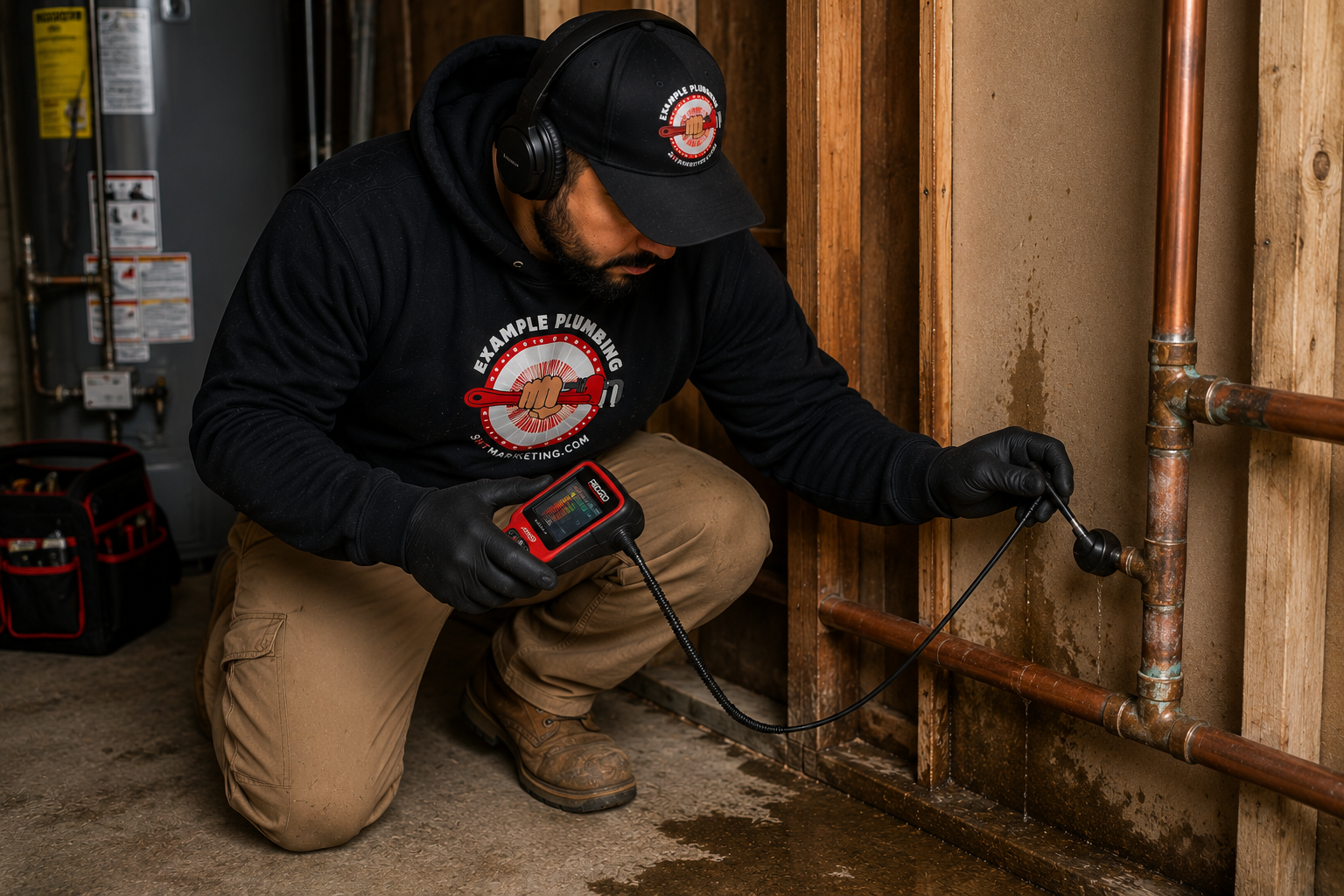
Not every plumbing leak announces itself with water pouring from a ceiling. Some leaks remain behind walls, under floors, inside cabinets, or below the slab long enough to damage building materials before the source becomes obvious.
Your water bill changes without a clear reason
A sudden increase in water use is not proof of a hidden leak, but it is a useful clue. Compare recent bills, consider seasonal irrigation changes, and check whether toilets, faucets, or outdoor fixtures are running. If usage remains unexplained, a concealed leak becomes more likely.
Walls or ceilings change color or texture
Water can stain drywall, soften paint, cause bubbling, or leave a ring on ceilings. The visible damage may be some distance from the actual leak because water follows framing and other surfaces before it appears.
Flooring begins to warp, lift, or feel unusual
Wood, laminate, and some flooring systems can react quickly to moisture. Tile itself may not show damage, but grout changes, loose flooring, or a warm area can provide clues depending on the type of piping and leak.
You hear water when nothing should be running
With all fixtures and water-using appliances off, listen for hissing, trickling, or flowing water. Some plumbing systems make normal pressure and expansion noises, so sound alone is not enough for a diagnosis. It can still be a reason to investigate.
The water meter keeps moving
A basic meter check can help determine whether the home is using water. Turn off faucets, fixtures, ice makers, irrigation, and other known water users. If the meter still records flow, there may be a leak somewhere on the metered side of the system. Do not disturb utility equipment you are not authorized to access.
Musty odors keep returning
Persistent moisture can create odors and conditions that damage materials. A plumbing leak is only one possible source, so the area should be evaluated rather than covered with paint or fragrance.
How professional leak detection narrows the search
A technician may combine pressure testing, meter observations, moisture measurements, thermal imaging, acoustic tools, isolation testing, and a detailed inspection. The goal is to narrow the location before opening walls or floors whenever possible.
Frequently asked questions
Can a hidden leak dry up on its own?
A pressurized plumbing leak normally continues until the source is repaired or the water is shut off. Intermittent leaks can seem to disappear when the related fixture or appliance is not in use.
Does thermal imaging prove where a leak is?
No. Thermal patterns can help identify temperature differences, but they should be interpreted with other evidence.
Should I open the wall myself?
Usually it is better to locate the source first. Opening the wrong area can add repair work without solving the plumbing problem.
See a focused service-page example at Leak Detection and Repair.
Need help with a plumbing problem?
Use the guide to understand the issue, then choose the service that fits the symptoms you are seeing.
View Plumbing ServicesCall 720-517-0622